

What makes a good management game? For many players, the appeal is the connection between understanding a situation, making a meaningful choice and seeing something grow. A modest shop or small operation can become a place worth caring about, with everyday decisions that feel part of a bigger ambition.
The genre includes many different experiences, from business simulation games to store management and tycoon games. Preferences vary, but clear goals, visible progress and a sense of ownership often help explain why management games are fun. Here are some of those player-facing qualities, with occasional public examples from Gavlora Games.
1. A Clear Goal Makes Progress More Rewarding
A management game can offer a lot to do, but the experience often feels more rewarding when the overall ambition is easy to recognize. A small shop becoming a thriving business is a familiar example. The player does not need to know every possibility at the beginning to understand why the next improvement matters. There is a place to start and something worth working toward.
A clear goal also gives everyday choices a setting. Selecting products or looking after a business feels different when those activities belong to a place the player wants to improve. The appeal is not simply completing a task. It is seeing that task as part of a larger ambition, with enough room to choose what deserves attention next.
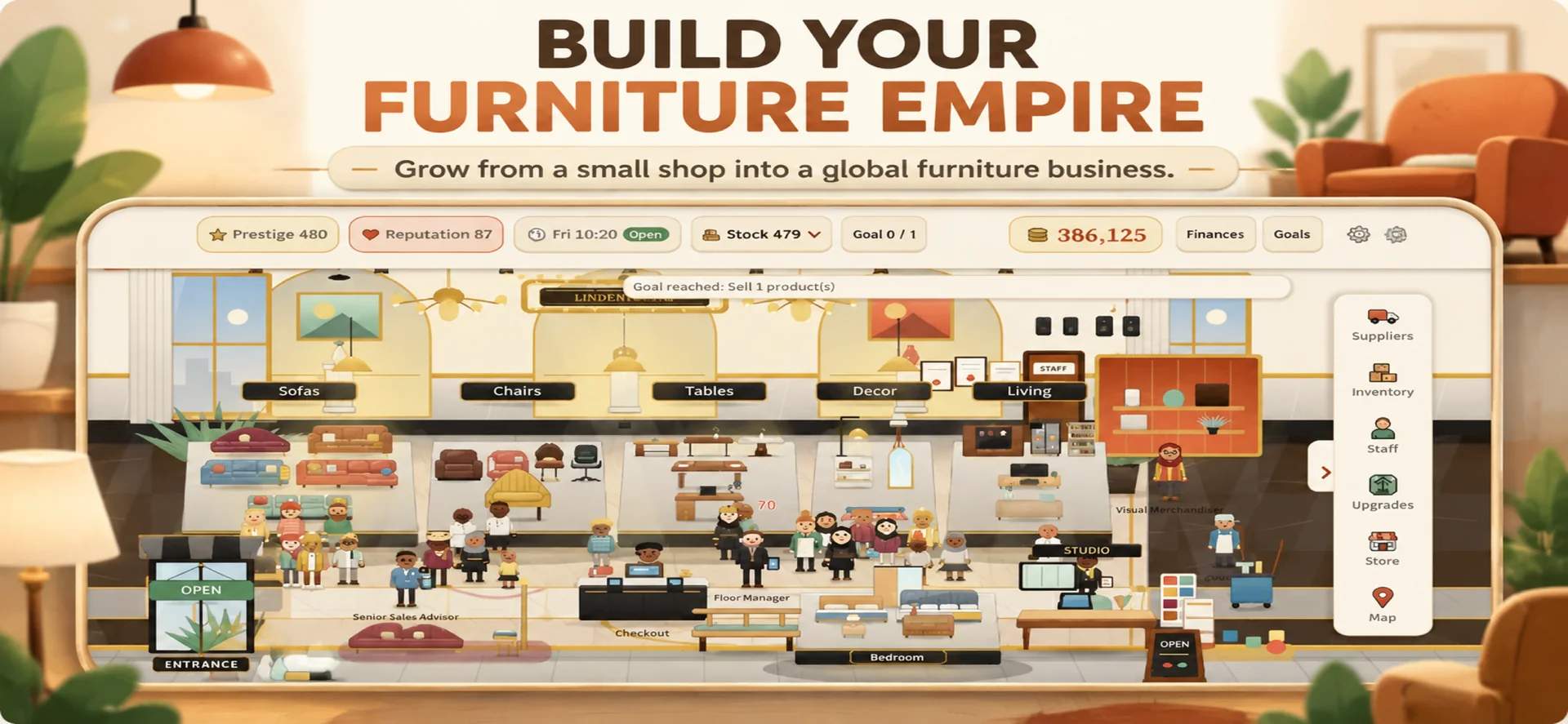
Furniture Empire, Gavlora Games’ first released title, offers that public-facing idea through a small furniture store with room to grow. Managing a showroom, choosing products and building a business give players a concrete setting for their ambition. The attraction is easy to picture: a modest beginning that can become something bigger.
2. Players Want to See Their Decisions Matter
An important part of the appeal of management games is being able to recognize the result of a choice. A changed shop floor, a different product range or a clearer picture of the business can make an action feel worthwhile. The player wants to feel involved in what is happening rather than simply watch an operation carry on around them.
Visible outcomes also make setbacks easier to talk about. A disappointing result can still be interesting when the player understands the situation well enough to consider another approach. Frustration is different from a challenge: one leaves a player unsure what happened, while the other gives them something meaningful to think about. Different players enjoy different levels of challenge, but being able to read the situation remains valuable.
Furniture Empire’s already-public activities include products, inventory, suppliers, staff and finances. They offer several recognizable sides of running a store. Players can enjoy the showroom itself while also taking an interest in the business behind it. These are examples of the experience on offer, rather than a promise that every player will value the same decision most.
3. Good Progression Gives Players a Reason to Keep Building
Growth is particularly satisfying when the player remembers what came before. A busy operation means more when its small beginning is still easy to picture. The contrast between those moments can turn progress into a personal story: the business used to be modest, and now there is more to look after, more to recognize and more to be proud of.
Progress does not have to mean that every part of a game becomes larger at once. Players can also appreciate becoming more familiar with an operation, understanding their options or feeling more confident about a decision. A visible improvement and a better grasp of the business can be rewarding in different ways. Both can give a reason to keep building.
In Furniture Empire, the public growth story includes improving the showroom, developing the business and expanding into new markets. Reputation and prestige are also part of that public experience. A player might be drawn to the next stage of expansion, while another enjoys improving the store they already know. The pleasure of management game progression can include both ambition and appreciation for what is already there.
4. The Best Management Games Are Easy to Understand, Hard to Master
For many players, a good management game offers an inviting beginning without making every later choice feel obvious. Familiar activities can help: choosing products for a store or serving customers in a small business gives the player a useful point of reference. The setting makes sense before the player has learned everything there is to do.
Understandable does not have to mean shallow. A player may recognize each individual choice and still enjoy considering which option suits the current situation. Sometimes the appeal is a careful comparison. Sometimes it is acting on a preference and seeing what happens. There is room within simulation and tycoon games for both thoughtful planning and the simple pleasure of looking after a growing place.
Clear information matters to that experience. Players generally want to know what they are looking at, what they can choose and what a result means for their business. Readable labels and an understandable view of the current situation make it easier to stay involved. The enjoyment comes from making management decisions, rather than struggling to find the information needed to make them.
5. Ownership Makes Growth Feel Personal
The feeling of “I built this” is one reason a small virtual business can become memorable. A player remembers the place as it was, recognizes what has changed and connects that growth with time spent playing. Even a familiar business setting can feel personal when it becomes the backdrop to the player’s own choices and small achievements.
That sense of connection does not mean every player needs the same kind of freedom. Some enjoy a bigger operation; others like a business that feels familiar and well looked after. A store can be interesting as a place to improve as well as a business to expand. The satisfaction can come from recognizing the whole operation, not only its next milestone.
Gavlora Games’ upcoming projects offer different high-level business fantasies. Stay Empire is about starting with a small roadside property and growing toward a larger hotel business. Bean Journey centers on running a small coffee business, serving customers and growing the operation. Both are upcoming projects. These broad descriptions express their public direction, not confirmed feature lists or release promises.
6. Player Feedback Can Help Games Improve
Players notice different things about the same game. One person might remember a satisfying improvement, while another finds a particular moment unclear. Hearing those experiences can make a conversation about a game more useful than a simple statement that it is good or bad. The details of what a player enjoyed or wanted to change give their feedback context.
A helpful message does not need to be a complete proposal. A player can describe the game, the moment they remember and what they hoped to understand or do. Suggestions about everyday convenience, a different business theme or a more enjoyable way to play can all start a conversation. There is no need to explain how a studio should build the suggestion.
The Gavlora Games Community page offers email paths for general ideas and feedback about individual games. Gavlora Games builds its games internally and reads player ideas, but cannot promise that every suggestion will become part of a game. For upcoming titles, sharing an idea does not turn that idea into an announced feature.
Meaningful decisions, understandable situations and visible growth are some of the qualities players can enjoy across management, simulation and tycoon experiences. Gavlora Games’ games catalog brings together the released Furniture Empire and the upcoming Stay Empire and Bean Journey. Whether the setting is a furniture store, a hotel business or a coffee operation, the appeal begins with the player: something to care about and a reason to keep building.